Featured

Improving Quality Assurance Services To Overcome Software Challenges

Digital transformation requires an overall change in organizational culture and mindset. This change would involve breaking the habit of throwing things over the fence. Instead, a collaborative team culture, a quality-driven mindset and transformational practices will require a customer-centric approach. In fact, as enterprises are advancing their digitization, it is necessary for them to adopt a more modern approach towards quality assurance services.

Factors and Challenges Involved In The QA Modernization Journey

The major factor involved in the process of modernization of QA is the spread of testing responsibility in the distribution team. Within traditional QA strategies, testing was considered and performed only as a part of test teams. They were assigned codes at the end of the development cycle and were responsible for writing and managing test code.

Modernizing QA is writing a test while ensuring that the descriptions are appropriate for distribution teams and making testing centralized and accessible to the entire product team. Modern strategies for quality assurance require consulting with developers and testing the responsibility of the entire team.

Within large organizations, such QA change requires tremendous management skills and the ability to justify the change in terms of business value. As, with this change, QA teams start working closely with developers day by day, the roles and responsibilities of managers also change.

By being a line manager in the QA team, people need to assume the role of a coach where they assist and propose governance to ensure seamless collaboration between different parts of the SDLC.

Implementing Enterprise-Wide Test Automation Strategy 

When we start embedding quality engineers within the distribution team, consider them as a matrix team, where they differentiate and they take their order and priority from another person who is within the distribution team Have sat, we have increased the inability to receive it.

In large organizations, many teams often have many different test automation frameworks, resulting in not only redundancy but also continuous reinforcement of the wheel.

Conclusion 

As a final comment, Melissa emphasizes the need to dispel the myth of proving one’s worth as a quality engineer. Therefore, it is expected that the modernization of QA will reveal the fact that we need to prove values consistently. Our values should go along with our ability to collaborate without a delivery team to show value as part of our normal day-to-day activities and, ideally, we need to continue to prove the value of QA There will be no need to use our platform as we have already proved in our work

Featured

The Inevitable Need For Mobile App Quality Assurance

The rapid increase in the number of mobile apps has brought a substantial rise in competition when it comes to mobile app development. According to Statistica, there were more than 6.5 million apps on Google Play and Apple App Store as of May 2018. Considering these huge numbers, one can say that there is a dedicated mobile app for almost every user’s needs. Consequently, if you plan to develop and launch a mobile app, you have to ensure that it’s going to be engaging and user-friendly, if not unique. A successful mobile app development strategy must focus on delivering great user experiences across devices. Quality assurance services ensure that a mobile app performs at its peak efficiency with minimal disruptions on all quality parameters.   

We, at Oodles, provide on-demand quality assurance services to deliver high-quality mobile app development experiences to clients. Our QA engineers use agile testing methodologies and advanced tools to ensure that your app performs seamlessly across devices. Based on our past experiences, we highlight the main challenges with mobile app development and how we can address them through QA testing.   

Also read Improving Quality Assurance Services To Overcome Software Challenges

Common Quality Issues In Mobile App Development

Performance Issues

Performance issues are often linked with the scalability of a mobile app. In many cases, the app performs consistently well for a limited number of users. However, as the userbase increases, the app performance depreciates, resulting in bad user experiences. 

Usability Issues

These issues are reported generally when the user faces difficulties with the app interface. If some part of the app is not accessible for any reason, it negatively impacts on the overall user experience. Usability issues occur due to inefficacious QA software testing and the QA engineers must perform usability tests to avoid these instances.

Functionality Issues

Functionality issues are reported when several anomalies are detected in the app functionality, causing disruptions in the navigation flow. If a mobile app lacks a functional user interface, users will find it difficult to perform basic functions like signup/login, messaging, and app updates. 

Security Vulnerabilities

Security flaws may prove detrimental for the app users as they put the user data and privacy at stake. App security issues are generally associated with user authentication, data storage, and transfers (unencrypted). 


Agile QA Testing Approach To Overcome Quality Issues

At Oodles Technologies, we follow a step-by-step QA software testing strategy to proactively detect and resolve various types of app issues. Below are the tests we perform typically on a mobile app:

Basic Functionality Test / Smoke Test

We usually start with a smoke test that includes a basic check-up of the app’s functionality. It is to ensure that every button or menu works perfectly across multiple app screens. A smoke test is critical to ensure that all the basic functionalities of the app are finely-tuned to meet the users’ expectations. The functionality tests also enable QA engineers to identify potential points of failure to avoid instances of downtime and app crashes. 

Code Review and Analysis

Code review is an essential part of the software development lifecycle that may reveal several software glitches and potential points of failure. It is always wise to get your code peer-reviewed before pushing it further. However, we recommend performing code reviews after successfully conducting the basic functionality test. It saves you from the additional burden of bug detection as the entire process is granularized.  

Unit Testing

Unit testing enables QA engineers to test individual units or components of a mobile app. It is to ensure that every part of the app is fully functional and performs seamlessly across devices. Unit testing is usually followed by three other types of quality tests:

  • Integration Testing: Individual units are combined and tested together rather than testing each unit separately.
  • System Testing: System tests are performed after unit testing and integration testing to ensure that the app works smoothly with all components combined.
  • Acceptance Testing: Acceptance tests are performed to evaluate an app’s acceptance level to ensure that it is compliant with the client’s requirements.

Performance Testing

Performance testing is a critical part of the software development lifecycle that evaluates an app’s performance, stability, and responsiveness under a given workload. It is generally performed to identify and resolve issues with the app’s scalability, responsiveness, load time and navigation flow.

You may also be interested in reading Integration Testing and Its Types

Conclusion

Conducting the aforementioned tests ensures that all your app components are finely-tuned as per the requirements. It is advisable to perform as many tests as you can to ensure that the app performs seamlessly across the supported devices. Some other tests that may prove effective to optimize a mobile app are regression tests, compatibility tests, GUI tests, and synchronization tests. Check out our “Developer Insights” to learn more about these tests.

Featured

Transforming The Entertainment Industry With Virtual Reality

The immersive technologies like augmented and virtual reality continue to transform cross-industry applications, delivering engaging user experiences across devices. Virtual reality has evolved tremendously over recent years and is being used increasingly in gaming, advertising, entertainment, and employee training programs. The real-life simulations and immersive user experiences have led to the widespread adoption of virtual reality in the gaming and entertainment industry. 

That being said, VR applications are effective at providing more personalized user experiences and are more immersive than their AR counterparts. As a result, VR has become a popular medium of entertainment that promises to engage yours in the best possible manner.  

Let’s explore some popular applications of VR in the entertainment industry and how it drives maximum user engagement and interactivity.

Also read Improving Food Packaging Processes With Augmented Reality

VR Applications In Gaming and Entertainment

Entertainment brands are always on the lookout for new and innovative ways to engage their audience. The advent of next-gen technologies like AR/VR has provided them an effective way to maximize user engagement and boost their revenue. Below are the most popular applications and use cases of virtual reality in the entertainment industry.

Movies and Cinema

The immersive AR/VR technologies are transforming the cinematic experiences across the globe. Several prominent global film festivals like Sundance and Tribeca have introduced VR technology to feature short films, paving way for the interactive movie viewing. VR elements enable viewers to watch through the eyes of the movie characters, making them experience every scene in an immersive environment. Experts predict that it is going to be a leap forward from the modern-day IMAX technology that is improving the movie experiences of millions of people worldwide. Although it is far from going mainstream just yet, several production companies plan to launch IMAX VR centers across the globe.    

VR-based Gaming Applications

The advent of virtual reality has taken gaming to the next level by providing an immersive environment with real-life simulations. VR techniques enable users to experience the thrill and excitement of a video game in a real-world environment. For example, VR makes a gaming experience so immersive and realistic, that gamers feel like they are transported to a whole new world. 

VR-based games eliminate the traditional way of sitting in front of a television screen for hours. With virtual reality, gamers can actually indulge in a game almost as if they are a part of it. Furthermore, VR-based gaming applications allow gamers to interact with technology in a way that energizes them both physically and mentally.   

Sports and Adventure

The transformative aspects of virtual reality have made their way well beyond the closed spaces, bringing more fun to sports and outdoor activities. Users can enter a whole new world where everything looks magical, exciting, and as real as it could get. Virtual reality offers a number of opportunities for sports lovers to experience the heat of the game in the most exciting way. An increasing number of sports events are being shot with 360-degree cameras. These cameras enable authorities to create immersive real-time video footage of sports matches. Watching these videos with a VR headset gives you the impression as if you are running along with the players on the ground.   

The technology is also increasingly popular in virtualization of adventure sports like paragliding, skydiving, and scuba diving. Several leisure brands have set up VR centers where adventure lovers can virtually experience the thrill of blood-pumping adventure activities.   

You may also be interested in Factors Deciding the Cost of An Augmented Reality App.

Other Applications of VR

There is no doubt that virtual reality (VR) holds immense potential to transform the entertainment industry with its innovative aspects. Besides, the immersive technology has several other transformative applications in other fields. For example, VR-based techniques are effective at training a hotel staff with sheer accuracy and efficiency. Similarly, the technology is increasingly used in surgical training. Performing a virtual surgery is always a better way to train aspiring neurosurgeons to handle real-life situations.

It boosts their confidence level and prepares them for the actual surgical procedure which might be discomfited in the first attempt.    

Avail Our VR App Development Services To Delivering Engaging Customer Experiences

We are an AR VR app development company that specializes in building interactive VR apps to meaningfully engage the target audience. Our development team is skilled at using the latest VR development frameworks like OpenVR and Unreal Engine to develop applications that deliver immersive user experiences. We have successfully developed several AR VR apps for e-commerce brands, entertainment companies, and LMS solutions providers from across the globe. If you have an innovative idea to develop a futuristic AR or VR application, drop us a line or contact us for more detail.

Featured

4 Augmented Reality Trends to Watch in 2020

The proliferation of Augmented Reality (AR) technology can be experienced since 2018. Various businesses are using AR to market their products at shopping malls, apparel stores, and more. Ecommerce platforms are integrating AR to their apps to enhance user experiences and market products more effectively. We offer Augmented Reality app development solutions to enable eCommerce platforms accelerate sales. 

Trend 1: Augmented Reality as a novel method for shopping: According to the Gartner INC report, by the end of 2020, 100 million users will shop in AR online and in-store. By looking at the proliferation of AR technology it is evident that AR is considered as the novel method of shopping by consumers. AR VR app development companies are integrating AR to your business apps to make your products stand out from the competitors. 

According to BRP reports around 48% of consumers preferred to buy from the retailers that provide AR experiences. Presently only 15% of the retailers have incorporated AR technology to their business but the remaining 32% of the retailers stated that they will deploy augmented reality applications in the coming years. 

Trend 2: AR for navigation solutions: The trend of using AR for finding directions through navigation apps has been trending for a long time. The trend will continue to be favorite amongst consumers using AR-based navigation apps. Businesses are using AR navigation apps since 2019 for indoor navigation and it will continue to stand out as one of the top AR trends in 2020. 

Trend 3: Gaming Industry and AR : Oculus Rift and Pokemon Go are the two prominent examples of AR games that created a buzz amongst the players. Nintendo is yet another very famous AR game that users enjoy playing and the popularity of this gaming app has skyrocketed ever since it was released. 

Trend 4: Accessible Learning Material: AR is making learning easier for students at schools and colleges. It is enabling students to learn effectively through 3D and 4D visuals created with Augmented Reality technology. The learning through AR is made less expensive and more interactive to accelerate the learning of students. AR also facilitates the learning of students with different learning disabilities. Using AR technology education can be made accessible to students in remote areas. AR animated content is famous among students and has proven to increase the engagement of students in difficult topics. Oculus-Go is an AR-enabled headset that allows students to scan the elements of a book and receive a text from the teachers. 

Are you planning to increase user engagement of your eCommerce platform? We are a well-established AR app development company that enables businesses to increase sales through an AR-enabled shopping app. We use SparkAR to deliver feature-rich AR apps. Get in touch with us for more details! 

The apps we deliver using AR Technology include: 

  • Image Recognition based AR Apps
  • AR Gaming Apps-2D and 3D
  • AR apps for Commerce
  • Location-based AR apps
Featured

A Quick Comparison Between AWS ElasticSearch and CloudSearch

Amazon provides an exhaustive range of enterprise-grade cloud solutions to cross-industry businesses for enhanced security, transparency, and interoperability. Searching is a critical part of Amazon Web Services (AWS) that enables users to easily find the desired content on the internet. Providing an intuitive search interface is essential to augment customer satisfaction by delivering engaging user experiences. That being said, it is critical to select the right search tool for your application.

AWS cloud provides two advanced search tools that enable enterprises to strengthen their search engines for maximum user engagement and interactivity. These tools are:

  • Amazon ElasticSearch
  • Amazon CloudSearch

In this blog post, we are going to discuss the features, benefits, and feasible applications of these Amazon-exclusive search tools.

Also read Benefits Of Using AWS For DevOps

An Overview of Amazon ElasticSearch and CloudSearch

Both ElasticSearch and CloudSearch are cloud-based solutions from Amazon that enable users to create fast, scalable, and easy-to-use search solutions for their applications. The two solutions are quite similar except for a few notable variations in the form of features and capabilities. Let’s discuss the main points of differences between the two.

Access and Provisioning

Under Amazon Web Services (AWS), ElasticSearch is an independent search service run and maintained by elastic.co. It is an open-source cloud-based search solution that you may set up independently by downloading and extracting a group of files. Amazon ElasticSearch is a cost-effective search solution that is simple to install and easy to set up and use.

Amazon CloudSearch, on the other hand, is a fully managed cloud-based search solution that provides 360-degree search provisioning at minimal manual efforts. Using Apache Solr as the underlying text search engine, it renders full-fledged support for faceted search, full-text search, dynamic clustering, and real-time indexing. The AWS-based search solution also provides NoSQL features and facilitates database integration as well as productive document handling. 

Data Handling

Data processing is a significant feature of AWS-based search services. Both ElasticSearch and CloudSearch provide seamless data handling capabilities to users for their diverse applications. 

Amazon ElasticSearch incorporates dedicated plugins called ‘Rivers’ that are used to push data into a cluster for effective handling across devices. There are several different types of river plugins in ElasticSearch for carrying out different functions. Popular river plugins in AWS ElasticSearch are elasticsearch-river-mongodb, elasticsearch-river-jdbc, elasticsearch-river-couchdb, and more.    

In AWS CloudSearch, data or documents are converted into XML or JSON formats and then pushed in batches rather than clusters for indexing. For example, data may be pushed to S3 according to the defined path to achieve indexing. 

Upgrading and Customization

AWS ElasticSearch features are easy to upgrade. However, the upgrades are manual unlike Amazon CloudSearch. To upgrade an application, you simply need to replace the ‘lib’ folder of the existing search application with a new one.  

All major updates in AWS CloudSearch come directly from Amazon, eliminating the need for manual processing.  

Search and Indexing

AWS ElasticSearch incorporates search APIs to perform faceting and filtering of search data. The search APIs provide frictionless search features with several built-in libraries for indexing. 

CloudSearch provides a more simple approach for indexing through an easy configuration service. It enables users to upload their documents by creating a specific search domain including sub-services.

Licensing Requirements

AWS ElasticSearch is an open-source search solution that doesn’t have an up-front licensing requirement, and thus no additional costs for licensing. However, it requires an experienced team of developers (whether in-house or offshore) to handle complex features and custom functionalities.

CloudSearch imposes charges on an hourly basis, depending on the size of user searches. However, it doesn’t require dedicated developers as the operations are simplified and manable through a simple interface.

Security and Privacy

Amazon ElasticSearch offers a dedicated plugin to effectively handle user authentication, authorization, and permission allocation. The plugin called ‘Shield’ enables developers to carry out functions like encryption, auditing, IP filtering, and permissioned access control. However, shield is an add-on tool that must be purchased separately.  

Amazon CloudSearch provides IAM-based access control mechanism to grant users access to its features and resources. IAM stands for identity and access management and is used to assign different roles to users, on a permissioned level.

You may also be interested in reading Exploring the Benefits of Migrating Applications To AWS Cloud.

Conclusion

Both AWS ElasticSearch and CloudSearch provide fast, scalable, secure, reliable, and easy-to-use search solutions for a wide range of applications. While both services use advanced next-gen technologies to enhance search features, ElasticSearch is more suited for enterprise-level use cases. On the other hand, AWS CloudSearch is a fully managed platform that provides users access to custom features like plug-and-play startup, auto-patching, and automatic updates from Amazon. 

Avail Our AWS Development Services To Enhance Business Productivity

We are a 360-degree software development company that also specializes in providing end-to-end managed AWS cloud services. We provide full-fledged support for cloud application development, custom cloud integrations, migrations, and technical maintenance services. Our development team is skilled at implementing AWS cloud suite to build scalable web and mobile applications that are accessible across devices.
Featured

Cost Comparison of Prominent Cloud Service Providers

Implementing cloud solutions enable businesses to strengthen their IT infrastructure, streamline their inbound/outbound processes, and safeguard their mission-critical data. As the cloud application development services become mainstream, several leading cloud service providers have significantly reduced their prices. In addition, they have upgraded their cloud offerings and increased value proposition for improved customer support. However, several startups and small-to-medium enterprises (SMEs) face difficulties while choosing the right cloud service to achieve their business goals.

This blog post guides you in the right direction to choose a reliable and effective cloud service provider at the best price. 

Also read Microsoft Azure Cloud For Beginners

Top Cloud Service Providers

When it comes to cloud services, tech giants like Google, Amazon, and Microsoft dominate the global market on a large scale. That being said, it has always been difficult to compare these three in terms of pricing as well as quality. Let’s compare the popular cloud services and their prices with respect to cloud storage.     

Amazon S3

Amazon Web Services (AWS) is one of the most extensively used cloud services platforms that provides on-demand cloud services on a metered pay-as-you-go basis. Under AWS, Amazon Simple Storage Service (S3) is a popular cloud storage service that provides object storage through a dedicated interface. Amazon S3 enables enterprises to effortlessly manage their data with improved security at every level.

There are three main expenses related with Amazon S3: 

Capacity cost (charged per GB/month) ~ $0.03/GB/month 

It is charged on an hourly basis. 

Programming interface cost for activity of documents ~ $0.005/10000 

Information moved outside of AWS ~ $0.02/GB 

Information moved to AWS ~$0.06/GB  

Amazon EBS

Amazon Elastic Block Store (EBS) provides a variety of storage options that are mainly divided into two broad categories i.e SSD-backed storage and disk-backed storage. The former is effective at handling transactional workloads while the latter is best suited for handling throughput-intensive workloads.  

General Purpose SSD (gp2) Volumes$0.10 per GB/month of provisioned storage
Provisioned IOPS SSD (io1) Volumes$0.125 per GB/month 
Throughput Optimized HDD (st1) Volumes$0.045 per GB/month
Cold HDD (sc1) Volumes$0.025 per GB-month

Google Cloud Storage

Google is the second largest cloud service provider having a dedicated cloud platform under the name of Google Cloud Storage. The platform provides secure storage and seamless access to enterprise data on Google cloud infrastructure. It further improves data security and adds advanced sharing capabilities for a seamless access to enterprise data across devices. 

Multi-regional$0.026 – 0.036 per GB/month
Regional$0.02 – 0.035 per GB/month
Nearline$0.01 – 0.02 per GB/month
Coldline$0.004 – 0.014 per GB/month

Azure Files

Azure Files is a cloud computing service from Microsoft that provides a fully managed data storage and file sharing platform. The file shares on Azure cloud are easily accessible across devices via Server Message Block, popularly known as the SMB protocol.  

Block Blobs$0.002 per GB/month
Azure data Lake Storage$0.001 per GB/month
Managed Disks$1.54 per GB/month
Files$0.06 per GB/month

Conclusion

Although the price comparison between these cloud platforms have little significance, it can sometimes reveal major differences that might have gone unnoticed. It is, therefore advisable to consider pricing as value as the value offerings of different cloud platforms while finalizing your cloud service provider. 

Why Choose Us For Cloud Application Development?

We, at Oodles provide end-to-end cloud application development services to build and deploy user-friendly enterprise applications on cloud. Our development team specializes in using the prominent cloud computing platforms like AWS, Azure, and Google Cloud to integrate cloud technology into your business processes. Our enterprise cloud services safeguard your mission-critical business data and improve accessibility across devices

Featured

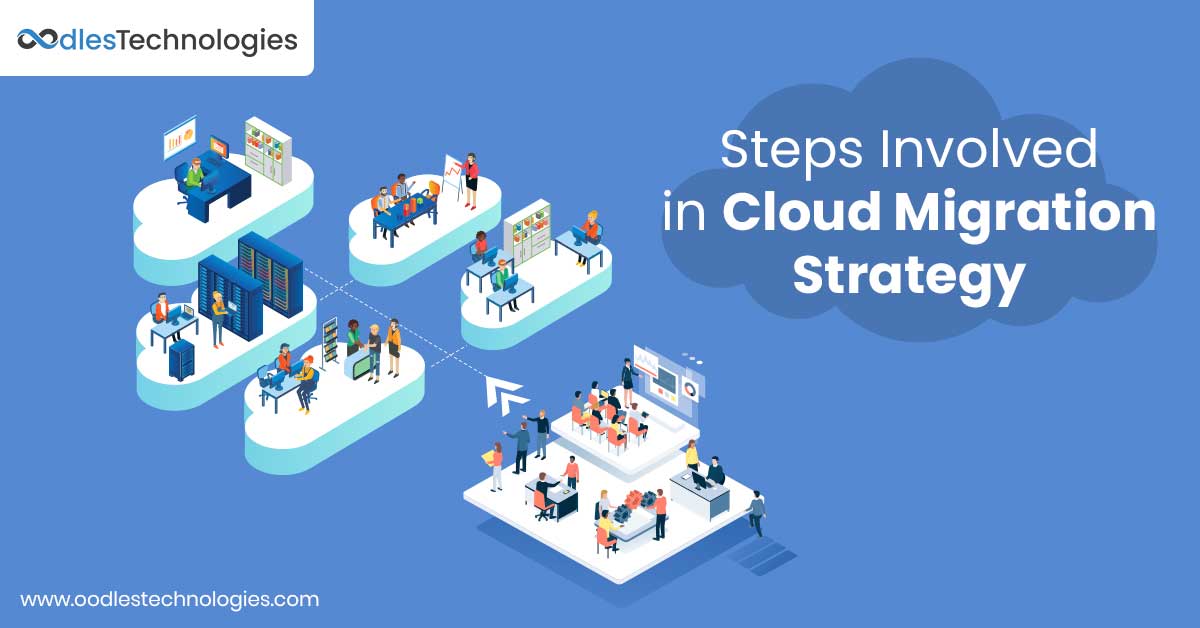
Steps Involved in Cloud Migration Strategy – Oodles Technologies

Traditionally businesses adopted on-premise hosting to process and store the data because it gave the owners the liberty to control the hardware. With time businesses felt that on-premise hosting is reliable but it is expensive in comparison to infrastructure-as-a-service-module(Cloud). Hosting on Cloud is cost-effective, convenient, flexible, and secure. Cloud Services are inexpensive and provide more flexibility to handle IT infrastructure needs. 

Read More: Steps Involved in Cloud Migration Strategy

Featured

Accelerating Web Development Using Azure App Services

This blog post highlights the key benefits of using Azure managed services to accelerate cross-platform app development processes.

Platform as a Service (PaaS) has become an increasingly popular medium for web development with significant advancements over recent years. The benefit of using these platforms is that you get access to integrated cloud services to organize and safeguard enterprise data. In addition, most PaaS platforms support high-level languages like Java, Python, PHP, Ruby, and .NET. Since most developers are well-versed with these languages, they can easily learn PaaS techniques to accelerate their development efforts.   

Azure App Service is a PaaS platform introduced by Microsoft to strengthen its cloud-based web services architecture. It provides a fully managed platform to developers for building, deploying, and scaling cross-platform web and mobile applications. Azure PaaS provides requisite tools and integrated cloud services to build robust and scalable web/mobile applications, APIs, and Logic apps. 

Azure Service Fabric
Azure service fabric is a distributed application platform that enables developers to build and deploy microservices-based enterprise applications. It simplifies the deployment of packages and containers to build and manage enterprise-grade and cloud-based applications running in containers. The service fabric enables organizations to overcome complex enterprise challenges that generally arise while developing and managing cloud-based native and hybrid applications. Below is a simple representation of Azure Service Fabric.

The above architecture diagram represents the capabilities of Azure App Service in conjunction with a series of virtual machines. While the legacy systems require connecting to a web server, the Azure Service Fabric employs virtual machines to provide web server functionality. It eliminates the requirement for acquiring and managing a web server.    

Also read Benefits of Implementing Cloud Based DevOps in Healthcare

Building Web Apps and APIs
Azure enables developers to code in supported languages like Java, Python, PHP, Ruby, and .NET and deploy these codes in containers. The fully managed Azure platform provides intuitive tools and integrated services for web app development, management, and monitoring. Developers can avail prebuilt apps from the Azure marketplace and customize them as per their project requirements. They also gain access to advanced tools such as Microsoft Visual Studio and Visual Studio Code IDEs for seamless integration and live-site debugging.     

IT Infrastructure Management
Azure provides organizations complete control over their IT infrastructure as they can easily run and scale web applications on Windows or Linux-based interfaces. In addition, they get reliable tools for infrastructure maintenance and load balancing with zero downtime and minimal disruptions.  

Azure makes it easy to meet the compliance requirements by enabling developers to add custom domains, SSL certificates, and single sign-on (SSO) features to web applications. Developers can timely detect bugs and software issues by routinely monitoring application health insights for better performance optimization and troubleshooting. 

Seamless App Hosting Services
Microsoft Azure provides an enterprise-grade platform to build and host web applications in your preferred programming language without any infrastructure complexities. With Azure, you don’t need to run and manage a web server which significantly reduces costs and accelerates the deployment cycle. Besides, developers use Azure Active Directory to add and manage 1000+ apps.

Azure hosting services enable developers to connect a web or mobile application to an enterprise system and deploy it in a public/private cloud, virtual network or on-premise system.  

You may also like Benefits of Using Python for Web App Development

Accelerated App Development
Azure app platform accelerates web development by providing automated provisioning and deployment services. Web applications developed using Azure App Service are easy to manage, scale, and deploy. In addition, Azure provides auto-scaling and traffic management capabilities for effective performance optimization without any data loss or downtime.

Avail Our Azure DevOps Services For Faster Development 
We, at Oodles, provide end-to-end Azure managed services and DevOps solutions for cross-platform web application development. Our Azure DevOps services render agile and streamlined IT operations with automated workflows to accelerate customer delivery services. In addition, we provide 360-degree DevOps consulting services to intelligently drive business enterprises toward their future goals with strategic planning. 

Featured

Exploring Hybrid Cloud Solutions To Strengthen DevOps

Cloud computing has enabled several cross-industry businesses to drive digital transformation through effective data handling. An increasing number of companies are moving their business data to the cloud platform to reduce their capital expenditure and operational costs. Nevertheless, migrating business data to the cloud is only the first step towards digital transformation as there are numerous possibilities to drive digital growth. 

Development and operations in the IT sector, popularly known as ‘DevOps’ play a critical role in the digital transformation journey of an organization. DevOps strengthens the core development operations of an organization by bridging the gap between development and operations teams. Putting it this way, DevOps is an approach to formulate agile development methodologies with a focus on reducing the development lifecycle. In this blog post, we will explore ways to strengthen DevOps through hybrid cloud integration and cloud application development

The Importance of Having a DevOps Model

DevOps is gaining traction in software development because of its ability to deliver applications faster and maintain an efficient development workflow. 

Developers often face challenges like software performance issues, bugs, glitches, and system failure. Besides, they have to speed up their work cycle to meet users’ expectations. At the same time, operations teams are constantly under scrutiny as they are responsible for keeping systems up and running. 

DevOps combines the three phases of a software application lifecycle i.e development, testing, and production. It brings development and operations teams together to create a stable operating environment for faster code execution, reduced costs, and human errors. 

Also read Selecting Azure DevOps to Simplify Cloud Development.

Reasons For Implementing Hybrid Cloud

Hybrid cloud is a multi-faceted computing environment with a mix of private, public, and on-premises cloud services. Implementing hybrid cloud services in a business infrastructure can bring ample benefits such as increased scalability, flexibility, and cost savings. Hybrid cloud solutions introduce a number of hosting models to the IT infrastructure, thereby providing managers better control over business assets. 

Hybrid cloud solutions enable CIOs to move critical workloads between different hosting models to achieve business goals through effective resource handling. For example, an organization may store its sensitive business data on a private cloud while storing less critical data on a public cloud. 

Driving Digital Transformation Through Hybrid Cloud Solutions

A cloud platform, whether public or private, provides features like on-demand storage, networking, and other computing resources. Businesses and enterprises can use these features to effectively handle dynamic workloads like those from DevOps. 

Hybrid cloud infrastructure provides the right tools to developers for resource allocation and performance optimization. Besides, it enables dynamic resource provisioning, by rendering provisioned environments for on-premises or public cloud infrastructure. 

In addition, businesses can use several third-party tools to automate the provisioning and de-provisioning processes. The most popular provisioning tools are Ansible, Puppet, and Saltstack that are extensively used by companies to automate the creation of development environments. Using these tools enable businesses to create and implement development infrastructures dynamically, with minimal complexities. These tools also provide visibility into deployed development models through real-time reports.

You may also like Understanding the Amalgamation of AWS DevOps

Closing Thoughts

Implementing hybrid cloud solutions along with DevOps can accelerate the application development lifecycle and reduce business complexities. However, the process of hybrid cloud integration with DevOps comes with its own set of challenges. Using the right tools, at the right time is essential to reap the real benefits through both DevOps and hybrid cloud solutions. 

Besides, it is essential to have a clearly defined strategy to avoid business losses and ensure the smooth functioning of resources at reduced costs. Understandably, a large number of businesses refrain from changing their existing IT infrastructure due to all the risk factors involved. However, with the right strategy and the right team to implement a hybrid cloud in DevOps can do wonders for a business. It will not only strengthen their DevOps processes but also enables them to proactively achieve their future goals.

Why Choose Oodles For DevOps and Cloud Services?

We are a seasoned DevOps solutions company that provides end-to-end support for development, testing, planning, integration, and maintenance of software applications. Our DevOps consulting services intelligently drive cross-industry businesses with streamlined, agile, and automated IT operations. Avail our cloud consulting and application development services to automate your business processes and drive digital transformation through improved DevOps.

Featured

Exploring Cloud Computing Benefits for Pharmaceutical Companies

An increasing number of hospitals and medical institutes are relying on cloud computing for most of their data management processes. In fact, the whole healthcare industry is benefitting from cloud application development in one way or another. However, the adoption of cloud technology has been relatively slow in the pharmaceutical industry. A majority of pharma companies are using the cloud at the most fundamental levels while others are yet to adopt this technology. 

Nevertheless, when used in their core operations, cloud technology can radically transform the data handling capabilities of pharmaceutical companies. This blog post highlights the key benefits that pharma companies can achieve by implementing cloud technology in their core processes. 

Effective Data Management 

Pharmaceutical companies generate and process a huge amount of data on a daily basis. This data is normally generated through all sorts of clinical tests, product research, and market research. As a matter of fact, the clinical tests alone cost pharmaceutical companies a whopping sum of money every year. Cloud computing provides an opportunity to significantly reduce these costs and yield accurate results in almost half the time. Nevertheless, a majority of pharma companies are not fully utilizing their cloud resources for data management.  

Cloud computing provides pharmacists real-time access to trial data which is generated simultaneously as the clinical tests are performed. It enables them to timely detect underperforming sites and flag potential data quality issues. It also enables pharma companies to upgrade their Clinical Trial Management Systems (CTMS) for improved accuracy and faster data processing. 

In addition, a cloud-based CTMS system significantly reduces unnecessary expenses involved in conducting clinical trials. It eliminates the requirements for purchasing servers, installing applications, validating documents, and managing in-house data. In this way, it also enables pharma companies to meticulously complete clinical trials in weeks that would normally take months.

Easy Access To Information

Pharma companies, like all companies that rely on data and computation, require easy data retrieval and accessibility for seamless operations. However, for many of these companies, the data is not readily available across departments which causes uneven delays. In the absence of an effective data storage mechanism, the information is not readily available to employees across all departments. According to a survey conducted by Igloo, 43% of the respondents from SMEs claimed to have avoided sharing a document with a colleague because it was too hard to find. 

Pharma companies and hospital networks require instant access to information in compliance with the Drug Supply Chain Security Act (DSCSA). Moving to cloud-based solutions can enable these companies to streamline their data management processes and gain instant access to critical documents and research data. 

Multi-device Support

The pharma industry generates data in terabytes and petabytes every minute across multiple departments. The data contains invaluable information from R&D, clinical trials, and patients’ surveys. However, analyzing this data and extracting useful information is a challenging task for pharmaceutical companies.   

Cloud computing enables pharma managers to store large datasets on a global network that is accessible worldwide across multiple devices. Multi-device support provides an effective exchange medium for data from clinical research. This, in turn, enables pharma companies to function more efficiently with easy data accessibility. 

Time and Cost Savings

Implementing cloud technology in marketing and CRM operations of a pharmaceutical company can significantly reduce expenses as compared to traditional methods. Cloud eliminates the need for spending excessive amounts of money on software and hardware infrastructure. The data is readily available on the cloud in a secure storage facility. Besides, it mitigates uneven delays, saves time, and yields faster decision-making.   

Increased Security

For many years, security has been a major problem in cloud-based systems. It was one of the main reasons why most pharma companies refrained from adopting cloud technology. However, with recent technological advancements, cloud security has improved considerably. As of today, cloud is the most secure platform for data storage with multiple layers of security and encryption. Consequently, pharma companies can rest assured that their data is safe and is easily accessible across a wide range of devices.   

Use Oodles’ Expertise To Build Secure Cloud Applications

We, at Oodles, provide 360-degree cloud application development services for effective data management and processing. Our AWS cloud application development services ensure that your business achieves greater flexibility, agility, and efficiency at reduced costs.

Steps Involved in Cloud Migration Strategy

Traditionally businesses adopted on-premise hosting to process and store the data because it gave the owners the liberty to control the hardware. With time businesses felt that on-premise hosting is reliable but it is expensive in comparison to infrastructure-as-a-service-module(Cloud). Hosting on Cloud is cost-effective, convenient, flexible, and secure. Cloud Services are inexpensive and provide more flexibility to handle IT infrastructure needs. 

According to 2017, Cloud Industry Forum reports overall cloud adoption in the U.K was at 88%.

Main reasons for the rising adoption of Cloud by businesses are:

  • Cloud is mature, tried, and tested. Amazon, Cisco, and Microsoft are on-board with stable and mature cloud computing and data centers. 
  • Requires minimal implementation cost and it’s ROI is easier to forecast.  
  • Storage on Cloud is less expensive and easy
  • Adopting Cloud reduces downtime, infrastructure overhead, and cost 
  • Enables employees to work over the internet 

Migrating from on-premise hosting to the cloud may appear enticing but it is one of the most difficult tasks to accomplish. Netflix is now pioneers in cloud computing but it took them 8 long years to completely migrate from on-prem to cloud. 

Are you planning to migrate from on-premise to the cloud? Here are 4 easy steps that you need to follow to easily migrate to the cloud:

The concept of Cloud computing came in the year 2000. Over the years it nourished so well that businesses wanted to use it for hosting applications and data. Various Software-as-a-service companies were formed to enable companies to master the art of cloud migration. In Spite of that, the businesses failed to master the art of cloud migration. If you are one of the companies that failed to master cloud migration then follow these 4 simple steps:  

Step 1: Plan

Planning is one of the important steps in cloud migration. In the planning phase businesses have to focus on the key areas including portfolio analysis, program management setup, and cloud architecture and operating model layout.

  • Program management setup: It is PMO (Project Management Office) that manages the planning phase. The process starts with strategy building, program governance, and benefits realization. The PMO takes care of leadership commitment, re-structures strategy alignment, supports change management, and facilitates decision-making governance.  
  • Portfolio analysis: With application portfolio analysis businesses can adequately represent applications in scope. Businesses can use the application dependency information to plan the sequence of application migration. After the analysis is done then the case is pushed to enterprise cloud migration.
  • Cloud foundation and Operating Model Layout: There are various landing zones in a cloud foundation. These landing zones include a set of secured cloud infrastructure along with centrally managed services, built-in policies, guidelines, and standards. It is essential to create a stable base through the landing zones to receive a scalable as well as a sustainable enterprise AWS cloud model. Since Cloud computing is becoming the standard for delivering business technology operating models must advance to add cloud-centric capabilities. It is a Cloud operating model framework that amalgamates core elements in a productive, agile, and valuable manner. 

Step 2: Assess

This is the second step in cloud migration. In this phase, the applications are analyzed for future disposition. The cloud operating model and architecture are used to lay the foundation for migrations. Let’s explore how the assessment is done: 

  • Macroanalysis: In this step macroanalysis of business applications happens using the tested cloud readiness and assessment framework with established business value. Cloud suitability and IT efficiency guarantee a clear migration road map. Various other enterprise-wide concerns are identified around security, operations, networking, technical, organizational, regulatory, and financial. 
  • Microanalysis: After macroanalysis, microanalysis of business applications is done. Microanalysis evaluates the current state architecture and defines cloud architecture based on the patterns that were developed during macroanalysis. A detailed migration plan and effort estimates are prepared after microanalysis is done. 
  • Cloud Foundation and operating Model Design: Once the macro and micro analysis is done the design is finalized. The design should be such that it meets enterprise security and networking policies. First account and VPC structure are designed based on resource management, cost allocation, and security, ownership, and compliance isolation. The core elements in cloud operating models are the people, technology, and processes. These elements must flourish to achieve the desired cloud operating model goals and increase business value and operations. The people are skilled to be more cross-functional to achieve desired results. Processes are realigned around services and technologies and tools are picked to effectively implement and automate the processes. 

Step 3: Migrate

In the third stage, we migrate by implementing operating modules and foundation cloud architecture. When the first set of applications is identified as quick wins they are immediately migrated. The set should comprise of varying complexity of applications across different business units. In this phase, a proactive approach must be taken for change management. Consider the following:

  • Setting-Up Cloud Foundation and Implementing Operating Model: In this step landing zones are set up including network connectivity, accounts, policies, IAM Roles, VPC, network connectivity, and deployed workflow. Tools and shared services are also provided. Teams are mapped and key processes are rolled out to the new cloud-centric roles in the cloud operating model. The processes are rolled out with the help of the key learnings from the existing implementations to ensure the installation of selected tools.
  • Initial Migration: when the first set of applications are identified as quick wins they are released for migration. If the migration is successfully done then the portfolio is analyzed and added to the confidence of application teams. Also, the foundation is laid down for repeatable migration patterns.
  • Change Management: It is important to have effective change management for cloud migration to succeed. Change champions ensure smooth cultural shifts and effective co-creation of the upcoming road maps. To include change champions in the transformation journey they are skilled by conducting knowledge sharing sessions to achieve the results. 

Step 4: Scale

Scaling is as essential as migration. After migration scaling of applications is done to accelerate the cloud migration journey. Scalability enables businesses to reduce errors cost and keep a check on security. Consider the following:

  • Large-scale Cloud Migration: First the migration factory module is harnessed to target large-scale migrations. The large scale migrations are supported with specialized tools and flex teams that help in bringing reliability and efficiency to the process.
  • Optimizing Operating Model: It is important to keep an eye on the cost and optimize it through policies, monitoring, and processes to prevent it from escalating. For it, financial management is streamlined to ensure standardized tagging on all cloud resources.
  • Hybrid cloud model optimization: This is a transition phase where cloud and on-premises modules are managed. Further, the cloud module is enhanced and optimized on the bases of services and tools.

Cloud migration is a complex process and businesses take years to completely migrate from on-premise to the cloud.

Are you facing problems in migrating to the cloud? Oodles Technologies provides cloud consulting and application migration services to businesses across the globe. Get in touch with our cloud application developers today! 

Using AI with AR and VR To Enhance Customer Experience

The proliferation of next-gen technologies like Augmented Reality (AR), Virtual Reality (VR), and  Artificial Intelligence (AI) are affecting every major industry. These technologies have the potential to change the way people purchase products.  Lately, these technologies are used to enhance user experience and communication. In this article, we will discuss how the amalgamation of these technologies can influence different industries. 

AR VR App Development Company

According to Gartner, By the end of 2020, around 30% of B2B companies will use AI to augment their primary sales processes. Artificial Intelligence mergers with other disruptive technologies can enhance user experiences and increase business revenue. The integration of these three technologies is now used in the education, retail sector, manufacturing industry to accelerate processes. Our AR VR app developers receive requests for AR VR app development integrating Artificial Intelligence algorithms. 

Let’s explore some instances where Artificial Intelligence when integrated with AR can augment Extended Reality: 
Interesting Way of Education and Training

Artificial intelligence, when integrated with AR, VR, and MR, can support the education and training of the next generation. Various medical institutes are using AI, AR, and VR technologies to prepare students with virtual surgeries before they attempt a real surgery.  Stanford Medicine is a popular medical institute using Extended Reality after hospitals and medical schools to improve the training of doctors and surgeons. 

AI uses facts and figures, compares various techniques, and personalizes the virtual environment to improve virtual training of students.  AI, VR, and MR integration have replaced static trainers with customized trainers to improve the results of training. Trainers can ask questions, receive answers and training in an interactive environment that books can’t deliver. 

Facebook’s Owner Mark Zuckerberg owns Oculus VR to generate models using deep learning. Oculus VR automatically re-designs realistic character avatars on the basis of photographs that are captured.  

AR VR App development company

Source: Facebook

Facebook has developed various non-gaming experiences for users using AR, VR, and MR technologies to engage with customers. Facebook is trying to engage more customers by developing lots of non-gaming experiences along with built-in social networking. This step is taken by Facebook to provide users with more entertaining and useful personal experiences.

Customized Shopping Experience with Sentiment Analysis

In Extended Reality, people are sent into virtual environments that are made intelligent using sentiment analysis. The virtual environments are improved using detailed analytics collected through the sentiment data along with implementing AI and natural language processing. Integration of AI, VR, and MR increases engagement and it reduces the dependency on icons and menus by introducing people to the virtual world.

Integrating AR and VR with AI  provides the retail industry a world full of exciting possibilities. Clothing brands can introduce virtual showrooms to provide enhanced selection options from the inventory. Machine learning algorithms enable clothing retailers to customize products and overall shopping experience for the customers. 

Ralph Lauren store in New York City launched a high-tech dressing room that uses sentiment analysis from social media and customer’s movement. It also collects information about customers through big data and artificial intelligence linked with customers smartphones.

AR VR App development

(Source: Vimeo)

AR VR in the Gaming Industry

Pokemon Go is the first most popular AR app in the gaming industry. The makers of the app successfully generated more than $850 million dollars. It currently has a half-billion customer-base worldwide. AR and VR have changed the era of the gaming industry. The technology has provided a significant scope of revenue and investment in the gaming industry.

AR VR AND AI integration

Source: Designmosaique

Unity and IBM have partnered together to integrate IBM Watson’s Artificial Intelligence functionality within the popular game engine Unity 3D. The gaming engine will be updated with new features and functionalities like image recognition, speech-to-text, and voice recognition features to make AR/VR as front runners in the race of emerging technologies. 

Exclusive Way to Be Travel Guide

Various travel industries are using AI, AR, and VR technologies to make bookings, shopping, and location searching a seamless experience. The AI uses the Machine Learning algorithm along with AR and VR to change the way people search or select their destinations.  The integration of AI, VR, and AR enable airlines, hotels, and travel organizers to analyze the collected data and develop a self-learning system to enhance customer service.

Travel agencies now use VR and AR technologies to provide customers a 360-degree view or panorama of their rooms, room amenities, holiday location, and car rentals, etc. The travel agencies use AI to receive recommendations based on sentiment analysis and feedback.

Are you planning to upgrade your business operations with AI, VR, and MR technologies? We are a leading AR VR app development company that provides immersive in-app experiences to users across the globe. Get in touch with our experts for more details! 

Understanding the Role of Augmented Reality in Architecture

According to the McKinsey Global Institute Industry Digitization Index, the construction industry spends $10 trillion on construction-related goods and services every year, making it the world’s economy’s largest sector. 

The sector needs a high level of digitalization to accelerate the construction process in different parts of the world. According to the U.S Bureau of Labor Statics, and Economic Analysis,  the productivity in the construction work from the past 20 years has increased by just 1%.   In spite of so many next-gen technologies like Augmented Reality (AR), Virtual Reality (VR) at our disposal, we hardly use them to accelerate the construction process. 

 Let’s explore what is our take on using Augmented Reality Technology for Architecture:  

Superimposing BIM models: The Architecture, Engineering, and Construction (AEC) sectors are incorporating AR technology to give their clients a clear layout of how the site would look before it is completed. AR uses Building Information Modelling (BIM) to enable architects, engineers, and construction professionals to use tools and insights in the efficient construction of buildings, selection of design, and infrastructure. Augmented Reality apps make it easier for architects to less invest in design their clients won’t approve. It also saves the money of investors by giving them a real picture of the construction site beforehand. Thanks to Augmented Reality, Architectures no more have to rework again and again on design because the app projects the real design of the construction site within the deadlines.  

Oodles technologies AR VR app developers use AR development kits like Android’s ARCore and Apple’s ARKit for designing AR apps for architectures. Our AR construction apps enable architects to use augmented reality in the construction of blueprints of a site. We design apps for HoloLens, an AR headset that enables contractors to walk inside a BIM model overlaid on the real world. 

Mistakes can be prevented with AR Construction Apps: The construction layout created using the AR apps for the clients is beneficial for construction engineers working on the site. It enables the engineers to plan and prevent mistakes by double-checking the work on site. When the engineers are about to accomplish the project they can recheck each and every component from the 3D layout to identify if they are missing out on something. 

AR Manuals and Training

Construction work involves the use of heavy machines. The use of machines requires trained workers with special skills to handle the equipment. Using AR tutorials even an untrained worker can seamlessly handle the machinery at a construction site. It details construction workers with step by step knowledge on how to start a machine, how to use the tools for designing and so on. AR tutorials have reduced the need to hire highly skilled staff for machinery handling, thereby reducing the overall cost of construction. 

Augmented reality also enables workers to get trained in a controlled environment. Workers can work on large-scale machinery without the risk of injury. 

Collaboration using AR applications

Construction of a building is not merely dependent on a single person. The process involves teamwork of carpenters, plumbers, electricians, designers, welders, and managers. The coordination between the teams can be established through Augmented reality. Augmented reality technology enable people involved in construction work to collaborate more effectively and solve problems at different locations. Using AR field workers can share their video feed through the AR glasses. The AR glassed then enable workers to receive instructions from their seniors about machinery handling. 

Underground construction

Construction work also involves laying down the cables and pipes. The laying down the cables there is a risk of hitting a gas line or damaging underground utilities. One wrong step may lead to a massive explosion. Using Augmented Reality technology can, technicians can have critical information at their fingertips.

Are you an architect who wants to revamp the construction work at various locations. Oodles Technologies is a leading AR VR App development company that has designed various AR apps to ease the work of their clients. Get in touch with us for more details!

Design a site like this with WordPress.com
Get started